
LIISG
Laparoscopic Ileal Interposition with Sleeve Gastrectomy
General information
General information
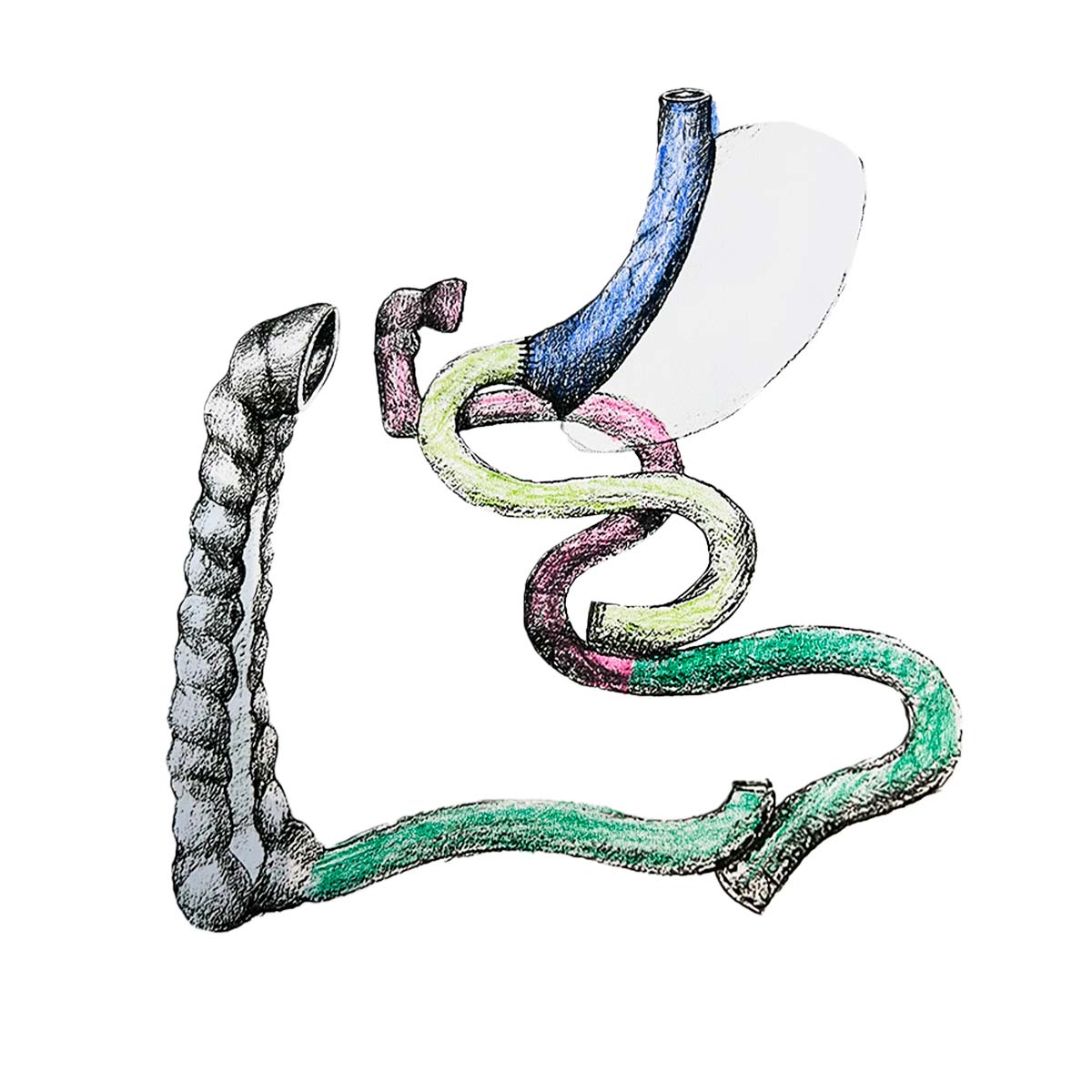
Ileal Interposition is a Metabolic Surgery procedure, used to treat diabetic patients. First presented by Michel Gagner Group by Animal Model and finaly performed by the Brazilian surgeon Aureo De Paula in 1999. This technique is based on replacing part of ileum, which is the distal part of the small intestine, either between stomach and the proximal part of the small intestine or behind of Treiz Ligamnet.. Sleeve gastrectomy is integrated as a standard part of the procedute.
Facts
Duration of surgery
between 150 and 180 minutes
Anaesthesia
general anaesthesia
Hospitalisation
4-7 days
Before Surgery
Indications for LIISG
- BMI mostly under 35 with Diabetes Mellitus Type II
- Well motivated (accepts nutritional and psychological criteria)
- no sweet eaters
- no binge (volume) eaters
- no stress eaters
- accepts follow up program
- no heartburn
Advantages
- Resolution/control of type 2 diabetes and accompanying co-morbiditiesdoes not require disconnecting or reconnecting of the intestines
- technically similar to Duodenal Switch (from a technical aspect)
- the operation eliminates the portion of stomach that also produces the hormone ghrelin, which stimulates hunger
- Increase of GLP-1 levels because of early food contact with ileum mucosa
Decrease of hepatic and peripheral insulin resistance - Regulation of late phase insufficient glucagon suppression
- Reduction of increased hepatic glucose output
- Regulation of late term glucose dependent (20–120 minutes) plasma insulin
response because of GIP effect
Disadvantages
- possibility of weight gain after 3 years
- little is known about possible longterm complications
- possible dilatation of stomach pouch after a while, resulting in a secondary operation
- requires more dietary discipline than Gastric Bypass
The Surgery
Technical description
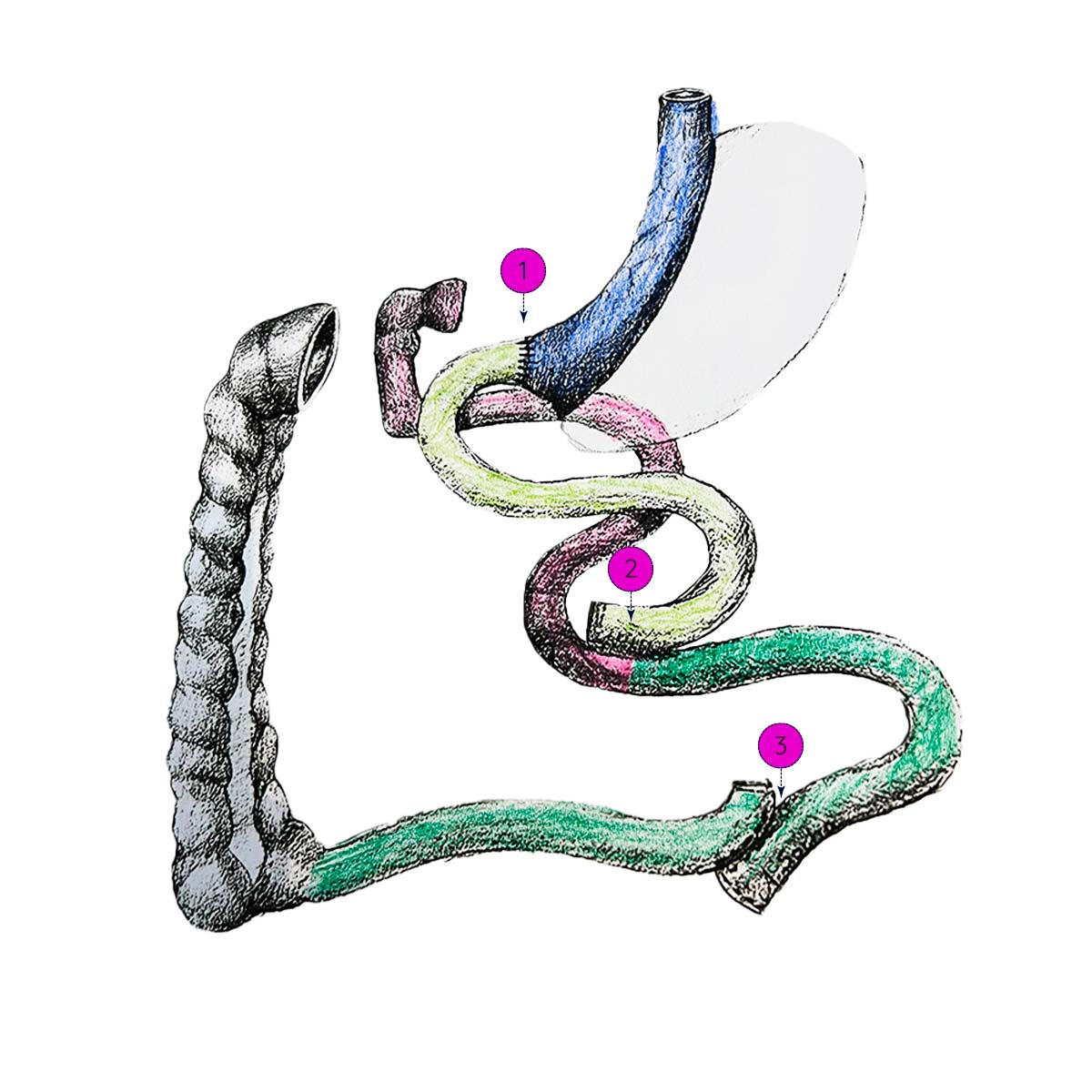
In addition to sleeve gastrectomy procedure, the connection between the stomach and the duodenum is closed off from the level of the second segment of the duodenum. While preserving the last 30 cm part of the small intestine, a 170 cm segment of ileum is prepared and connected to the first segment of the duodenum, which is at the end of the stomach. The other end of the ileum segment is connected to the proximal part of the small intestine. Thus, distal part of the small intestine is ‘’interposed’’ between proximal part of the small intestine and the stomach. Since duodenum and the proximal part of the small intestine is disabled, a partial bypass is in question. Patients who undergo this operation achieve better weight and blood sugar control, but face anemia (iron deficiency) risk because of the bypass procedure.
After Hospitalisation
Lab tests
- Morphology
- Electrolytes in case of vomiting
- Ferrum
- Creatinin in case of vomiting or low drinking rate
- Haemoglobin A1c by DM
* after three and six months, then annually
Supplementation
- Multivitamin + Minerals 1 tab. per day
- Biotin, Selenium, Vitamin B9 (B11), Zinc in case of hair problems
Standard Medication after Operation
PPI 20 mg, 0-0-1 (3 months)
Sport and physical activity
- 3 weeks after operation – rest
- More than 3 hours of physical activity per week – sport medical supervision and medical advice required
Important tips
A team of experts must approve the surgery before LIISG operation.
Because we promote safe practice and your safety is of paramount high importance to us and to you, the disadvantages and advantages of the different procedures will be carefully explained to you in detail on consultation.
In the preoperative period, you are provided with care from physicians, psychologists and nutritionists. This team of experts will give you accurate advice on all aspects of the postoperative period: What you can eat and drink, when and how often; what kind of exercises to perform; which individual therapy is necessary for specific issues related to your diabets.
Only if you are willing to change yourself you will achieve your goal, i.e. healthy weight loss. You must be aware that this will not always be easy. However, with every pound lost, you will win more quality of life, health and a longer life expectancy.