
MGB
Mini Gastric Bypass
General information
General information
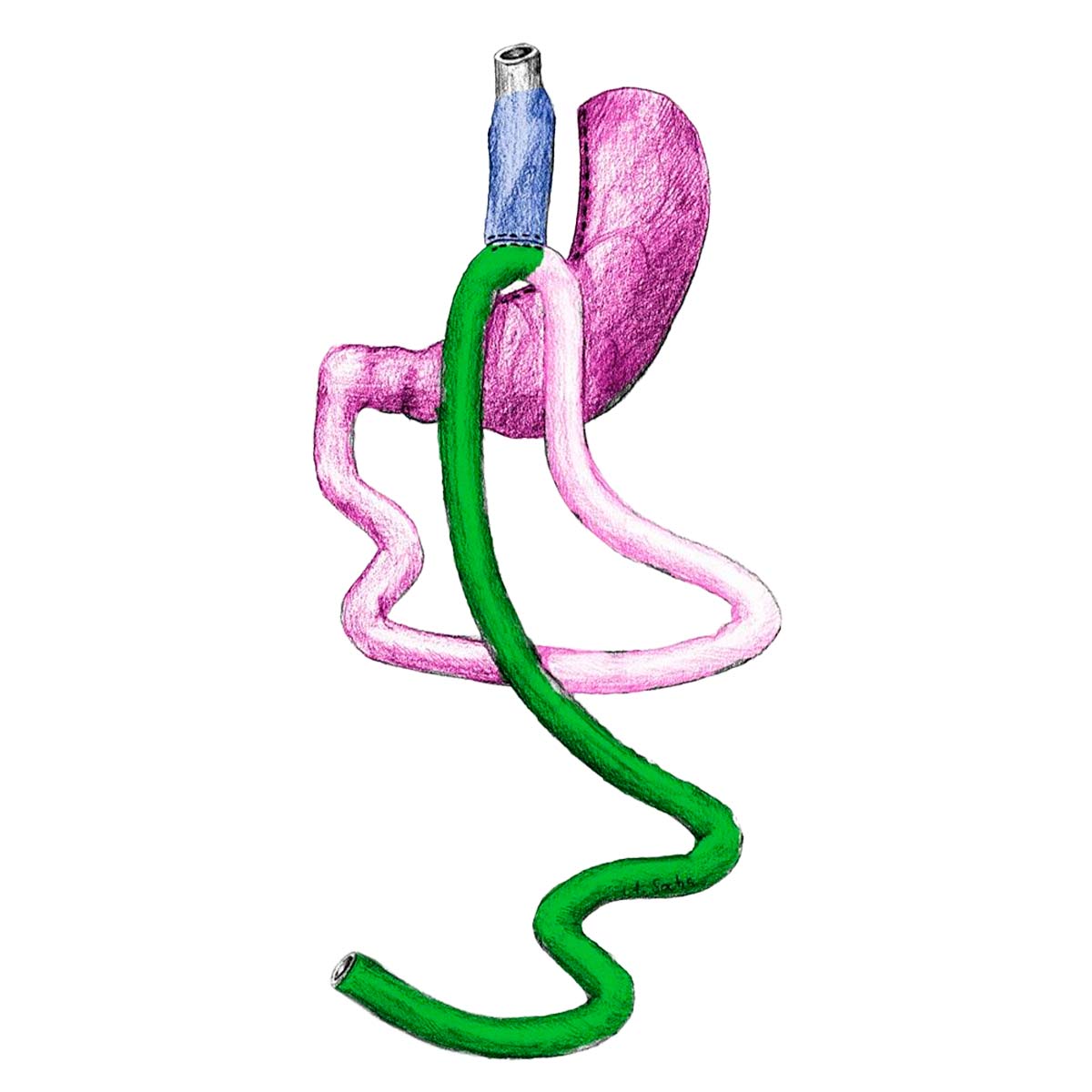
Mini Gastric Bypass (MGB) is a bariatric surgical procedure developed by Robert Rutlage. The procedure reduces food intake and diminishes the absorption of nutrients from the food. Absorption of nourishing ingredients is limited because part of the intestines is bypassed and not used. The volume of the stomach pouch after MGB is between 15 and 25 ml.
Facts
Duration of surgery
between 45 and 60 min
Anaesthesia
general anaesthesia
Hospitalisation
4-7 days
Typical patient
- patients with BMI from 40 (or 35 with related diseases) to 50
- patients who accept obligatory supplementation of vitamins and minerals
- sweet eaters
- patients with heartburn
Before Surgery
Indications for MGB
- BMI 40 (or 35 with related diseases) to 50
- treatment of:
– diabetes mellitus type 2
– arterial hypertension
– other related diseases - redo surgery after other metabolic operation in patients with high
compliance - accepts obligatory supplementation of vitamins and minerals
- sweet eaters
- patients with heartburn
Advantages
- very successful (50-70% of excess weight loss)
- operation for patients who failed restrictive procedures like Balloon, Banding and Sleeve Gastrectomies
- operation for sweet eaters
- operation for patients with heartburn
Disadvantages
- irreversible change in the anatomy
- lifetime vitamin and mineral supplementation after surgery
- conventional upper gastroscopy of duodenum and remnant stomach is
not possible
The Surgery
Technical description
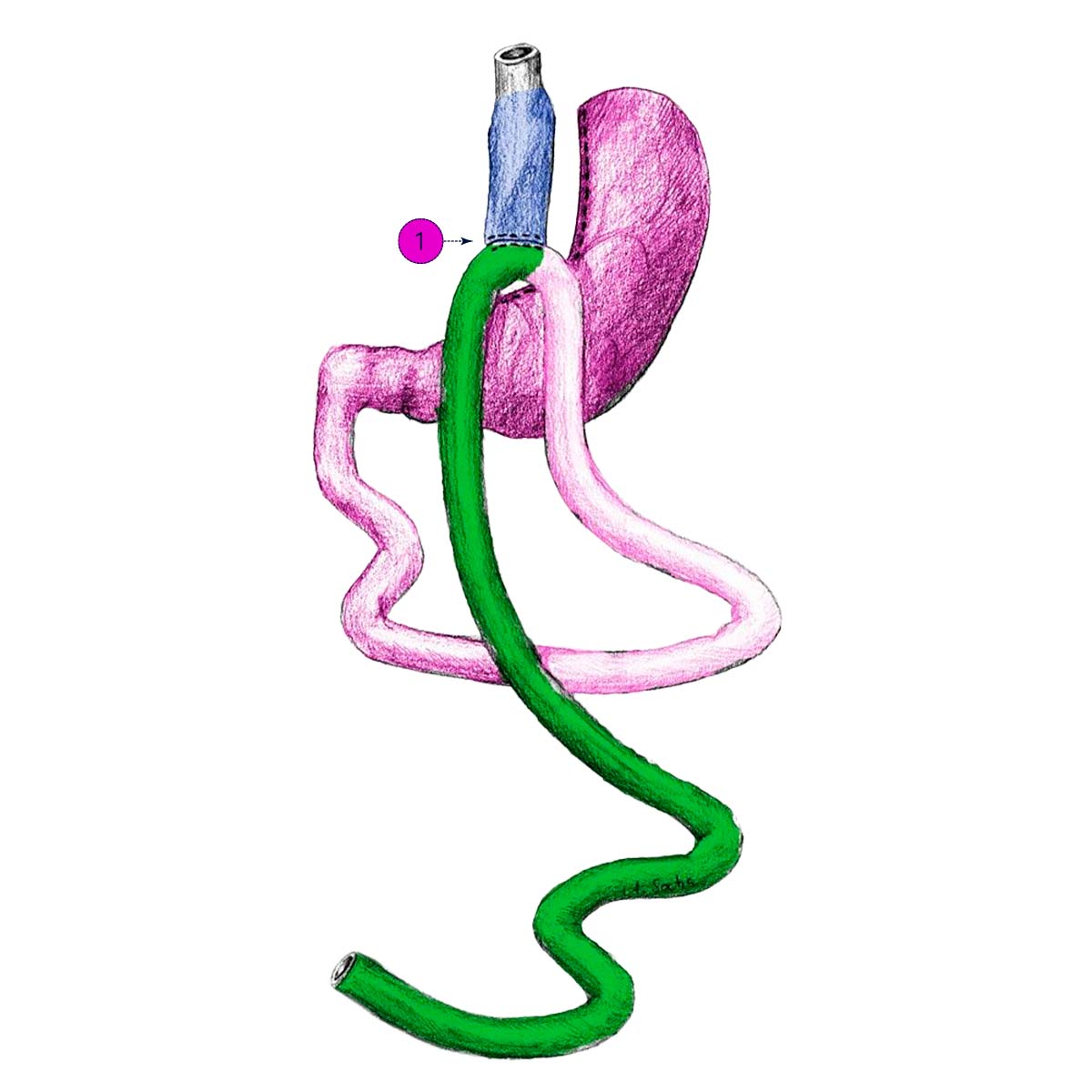
Mini Gastric Bypass reduces the size of the stomach through surgical stapling. This type of weight loss surgery cuts the stomach and leaves a reservoir of approximately the size of a walnut. Afterwards the biliopancreatic limb is measured (about 200cm). The separated intestine is connected to the stomach pouch (Gastro-enteroanastomosis GEA) mostly with the round stapling method. This causes the food to be directed immediately from the stomach to the jejunum.
After Hospitalisation
Lab tests
- Morphology
- Electrolytes
- Ferrum
- Creatinin
- Liver ferments
- Vitamins B1, B12-level
- HDL, LDL, VLDL, Chol
- Ferritin
- Transferrin
- Zinc
- Magnesium
- 1,25-Dihydroxy-Vitamin D3, Vitamin A
- Haemoglobin A1c
* after three and six months, then annually
Supplementation
- Calcium with Vitamin D3 2000 mg (with 130ug) per day
- Multivitamin + Minerals 1 tab. per day
- Fe+2 Iron 1 tab per day 30mg – one week long in a month, (3 weeks without the Ferrum)
- Protein 50g per day
- Vitamin B12 every 3 months i.m. (1000ug) or 25000 I.U. sublingual 2 times a week
- Vitamin A 1 tab. 1mg per day
- Vitamin B1 when needed
- Zinc 1 tab. 15 mg per day
- Biotin, Selenium, Vitamin B9 (B11) daily for 3 months
Standard Medication after Operation
PPI 20 mg, 0-0-1 (3 months)
Sport and physical activity
- 3 weeks after operation – rest
- more than 3 hours of physical activity per week – sport
medical supervision and medical advice required
Weight loss differences
The EWL after Mini GB reached 70% after five years in the best series.
After the second or third postoperative year, the patient seems to adapt to the surgery and to suffer its side effects in lower intensity, which brings a tendency for a slight weight gain / of lost weight. The weight gain is slight compared to the conventional Gastric Bypass.
Important tips
A team of experts must approve the surgery before MGB operation.
Because we promote safe practice and your safety is of paramount high importance to us and to you, the disadvantages and advantages of the different procedures will be carefully explained to you in detail on consultation.
In the preoperative period, you are provided with care from physicians, psychologists and nutritionists. This team of experts will give you accurate advice on all aspects of the postoperative period: What you can eat and drink, when and how often; what kind of exercises to perform; which individual therapy is necessary for specific issues related to your obesity.
You will have every opportunity to reduce your weight and improve your health. Just imagine the moment when you can wear size L clothes again. Discover your potential and improve your lifestyle. After surgery, you will normally lose approximately 50 kg in first 6 months, provided that you follow the nutrition plan, take exercise therapy and participate in scheduled group discussions.
Only if you are willing to change yourself will you achieve your goal, i.e. healthy weight loss. You must be aware that this will not always be easy. However, with every pound lost, you will win more quality of life, health and a longer life expectancy.