
LBSG
Laparoscopic Banded Sleeve Gastrectomy
General information
General information
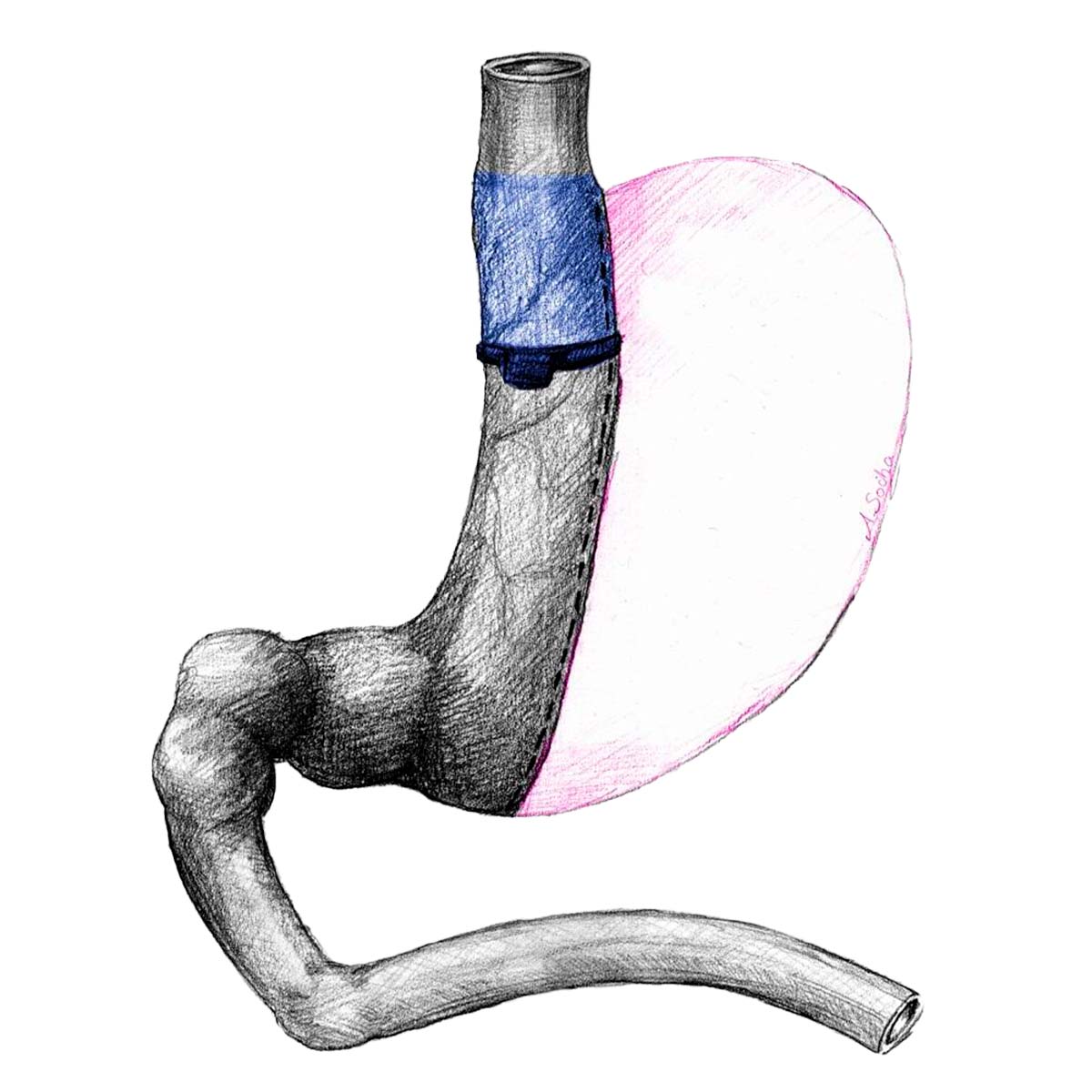
Banded Sleeve Gastrectomy is a surgical procedure that can be performed by miniinvasive techniques. The procedure reduces the size of the stomach to about 10% of its original volume and results in a limited capacity of food intake. Patients feel full after eating a very small amount of food. The volume of the stomach after LCSG is between 80 and 120 ml. In sleeve gastrectomy, the left side of the stomach is surgically removed by cutting and stapling. This results in a new stomach which is roughly the size and shape of a 20 cm tube. By this technique a silastic ring is additionally implanted in the upper part of the sleeve. This operation does not involve any “rerouting” or reconnecting of the intestines, it is a simpler operation than the gastric bypass. Also very important is the fact that the operation preserves the pylorus, the muscle that regulates the emptying process of the stomach. This acts as “nature's own functional gastric band” and allows food to remain in the stomach for a while, making the person feel full while the food trickles out. Coupled with the fact that there is no rearrangement of the bowel, it also means dumping and marginal ulcers are not a problem. The normal satiety mechanism is almost always regained.
Facts
Duration of surgery
between 30 minutes and 1 hour
Anaesthesia
general anaesthesia
Hospitalisation
4-7 days
Typical patient
- patients with BMI over 40 with contraindications for bypass surgery
- no sweet eaters
- no binge (volume) eaters
- no stress eaters
- patients who accept follow up program
- no heartburn
- patients in whom there are clear contraindications against Gastric Bypass or BPD procedure
- patients in whom it is / that are assumed to be the only operative possibility to introduce surgical obesity treatment
- patients who need to take medication which depends on exact and reliable intestinal resorption
Before Surgery
Indications for LBSG
- BMI over 40 with contraindications for bypass surgery
- no sweet eaters
- no binge (volume) eaters
- no stress eaters
- accepts follow up program
- no heartburn
- patients in whom there are clear contraindications against Gastric Bypass or BPD procedure
- patients in whom it is assumed to be the only operative possibility to introduce surgical obesity treatment
- patients who need to take medication which depends on exact and reliable intestinal resorption
Advantages
- may be used as the first stage of a 2-stage operation.
- the operation eliminates the portion of stomach that produces the hormone ghrelin which stimulates hunger
- low complication rate
- technically a simpler operation than gastric bypass
- does not require disconnecting or reconnecting the intestines
Disadvantages
- possibility of weight gain after 3 years
- this procedure involves cutting and stapling of the stomach and therefore leaks and other complications related to stapling may occur
- ring related complications
- requires more diet discipline (sweets) than gastric bypass
The Surgery
Technical description
Laparoscopic Sleeve Gastrectomy reduces the size of the stomach through vertical surgical stapling. At the beginning, the large stomach curve is separated from the omentum majus. Afterwards the gastric tube (36 F) is placed into the stomach. This allows safe and exact formation of the sleeve. The resection is performed using staples (GIA, suturing and cutting machine). The GaBP Ring is placed 60mm below the His angle and closed. The resected part of the stomach is removed from the abdominal cavity. The stomach volume after the operation is between 80 and 120 ml.
Sleeve-Pouch Vol.: a. 20ml
Fobi Ring a. 6,5-7,0 cm
Resected Stomach
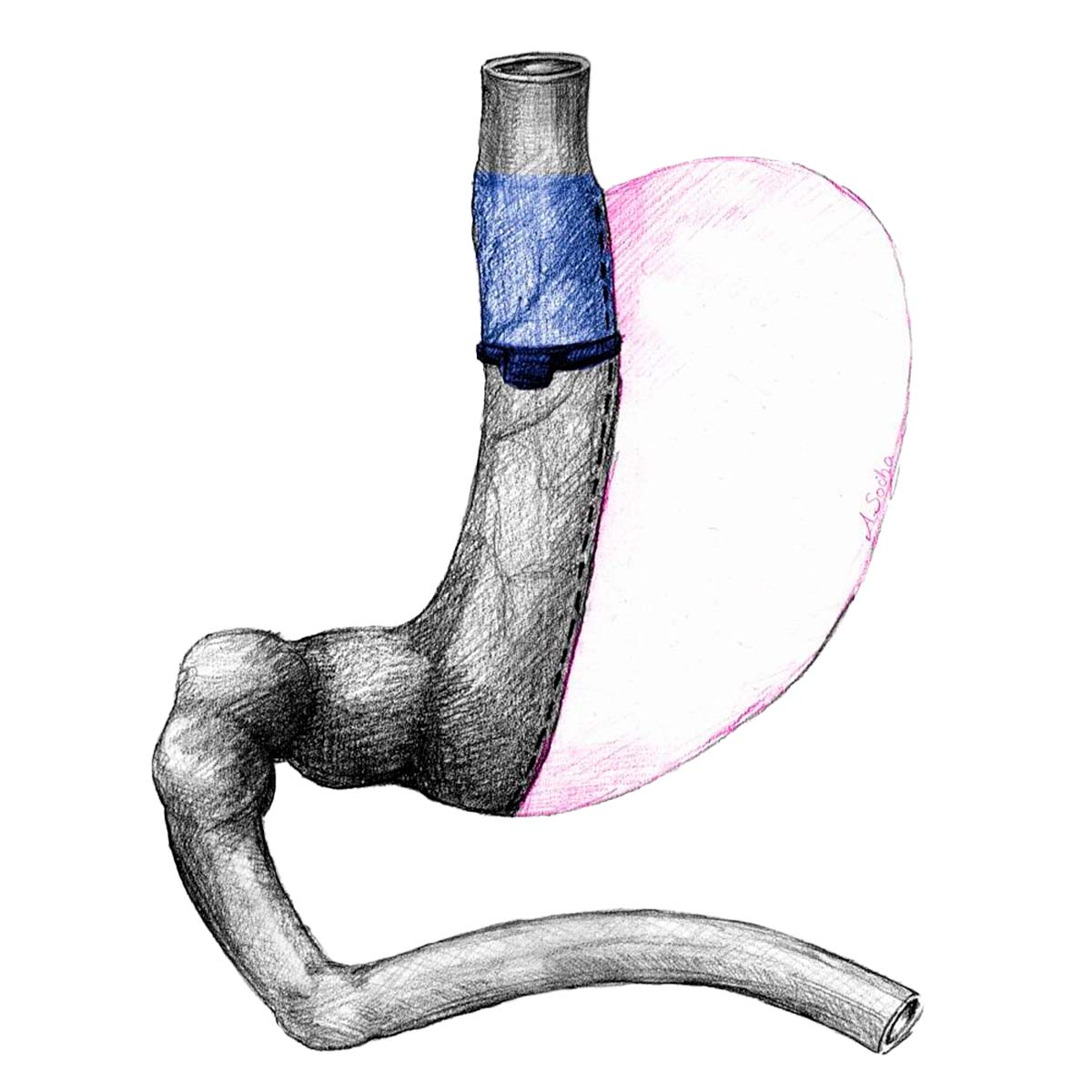
Sleeve-Pouch Vol.: a. 20ml
Fobi Ring a. 6,5-7,0 cm
Resected Stomach
After Hospitalisation
Lab tests
- Morphology
- Electrolytes in case of vomiting
- Ferrum
- Creatinin in case of vomiting or low drinking rate
- Liver ferments
- Haemoglobin A1c by Diabetes mellitus
* after three and six months, then annually
Supplementation
- Multivitamin + Minerals 1 tab. per day
- Biotin, Selenium, Vitamin B9 (B11), in case of hair problems
Standard Medication after Operation
PPI 20 mg, 0-0-1 (3 months)
Sport and physical activity
- 3 weeks after operation – rest
- more than 3 hours of physical activity per week – sport
medical supervision and medical advice required
Ring function
Adding a silastic band to Sleeve Gastrectomy might increase the success rate by preventing gastric tube dilatation. A ring diameter of 6.5 cm was chosen on the basis of quality of life and quality of eating studies performed in relation to the size of the ring in Banding Gastric Bypass. However, it must be mentioned that, compared to conventional LSG, additional potential complications may occur using LBSG. These may include silicone band migration, dislocation or infection and dysphagia related symptoms.
Important tips
A team of experts must approve the surgery before LBSG operation.
Because we promote safe practice and your safety is of paramount importance to us and to you, the disadvantages and advantages of the different procedures will be carefully explained to you in detail in consultation.
In the preoperative period, you are provided with care from physicians, psychologists and nutritionists. This team of experts will give you accurate advice on all aspects of the postoperative period: What you can eat and drink, when and how often; what kind of exercises to perform; which individual therapy is necessary for specific issues related to your obesity.
You will have every opportunity to reduce your weight and improve your health. Just imagine the moment when you can wear size L clothes again. Discover your potential and improve your lifestyle. After surgery, you will normally lose approximately 40 kg in the first 6 months, provided that you follow the nutrition plan, take exercise therapy and participate in scheduled group discussions.
Only if you are willing to change yourself you will achieve your goal, i.e. healthy weight loss. You must be aware that this will not always be easy. However, with every pound lost, you will win more quality of life, health and a longer life expectancy.