
LCTB
Laparoscopic Conventional Transit Bipartition
General information
General information
Sleeve gastrectomy and Transit bipartitation is a relatively new surgical technique introduced by Sergio Santoro in 2012 for the first time. A variation of this operation Loop Transit Bipartitization (SASI) is a relatively low-risk operation with high effectiveness in the treatment of Type 2 diabetes. The major advantage present less vitamin-mineral deficiencies than other absorption disrupting surgeries.
Facts
Duration of surgery
between 40 and 80 minutes
Anaesthesia
general anaesthesia
Hospitalisation
4-7 days
Typical patient
- Patients with BMI from 40 (or 35 with related diseases) to 50
- Patients who accept the intake of obligatory supplementation of vitamins and minerals
- patients without heartburn
Before Surgery
Indications for LCTB
- BMI 40 (or 35 with related diseases) to 50
- treatment of:
– diabetes mellitus type 2
– arterial hypertension
– other related diseases - accepts obligatory supplementation of vitamins and minerals
- patients with heartburn
Advantages
- very successful (50-70% of excess weight loss)
- operation for patients, where restrictive procedures like Balloon Banding and Sleeve Gastrectomies have failed
- operation for patients without heartburn
Disadvantages
- partly irreversible change in the anatomy
- lifetime vitamin and mineral supplementation after surgery
- foul smelling flatus
- flatulence
- diarrhoea
- malabsorption (possible -about 8%- Short Intestine Syndrome)
The Surgery
Technical description
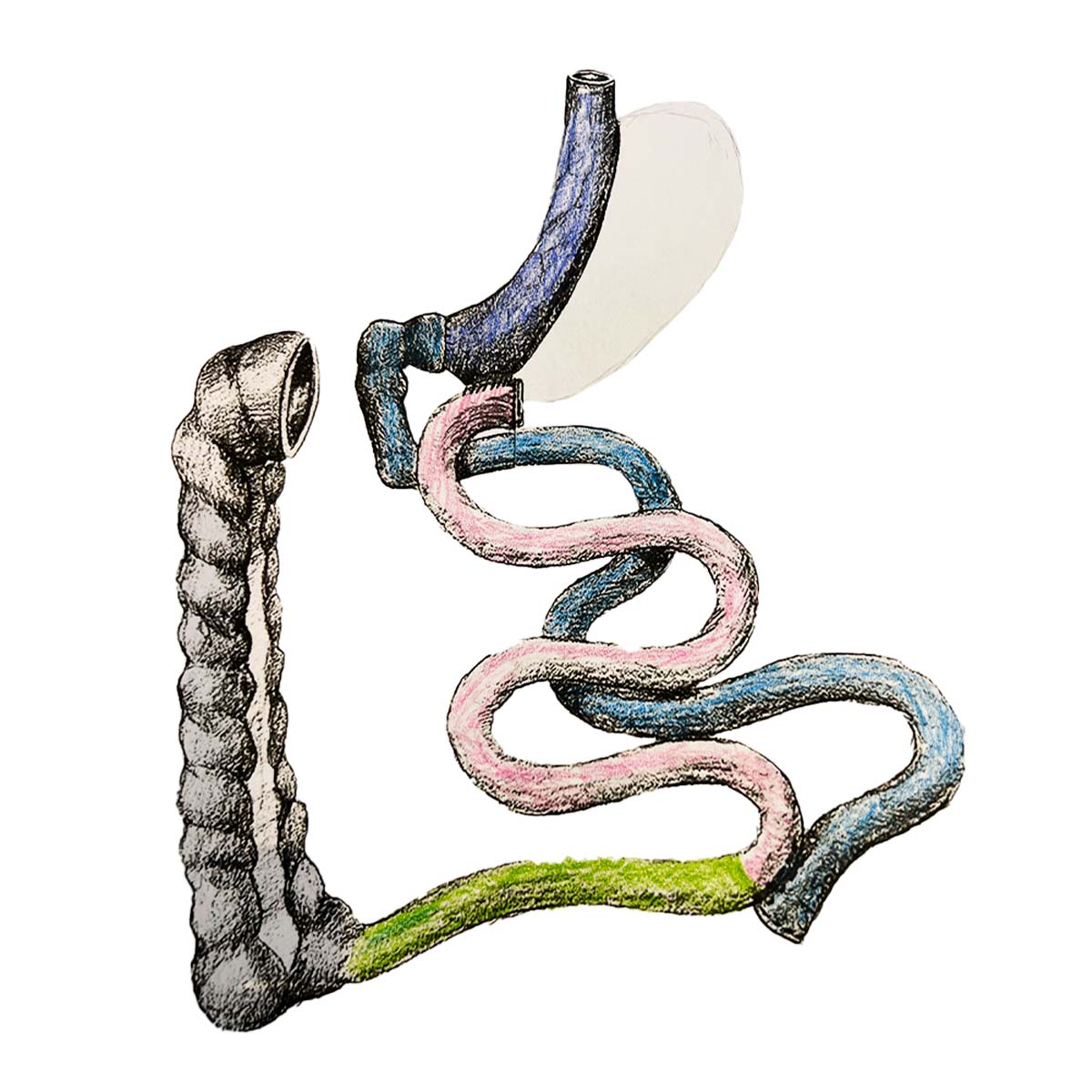
Transit bipartition is difficult to translate from English and basically means „intestinal bipartition”. It is a novel procedure for the treatment of type 2 diabetes associated with obesity. In addition to a standard tubular stomach, a connection is made between the lower small intestine and the antrum, the lower part of the stomach. The food that passes through the tubular stomach can now either take the „normal route” through the gastric portal, the duodenum into the small intestine, or it can go directly into the lower small intestine, where it triggers hormonal mechanisms that lead to an early feeling of satiety on the one hand and a rapid improvement in the metabolic situation on the other. Due to the fact that part of the food goes the normal way, the phenomena of malabsorption do not occur.
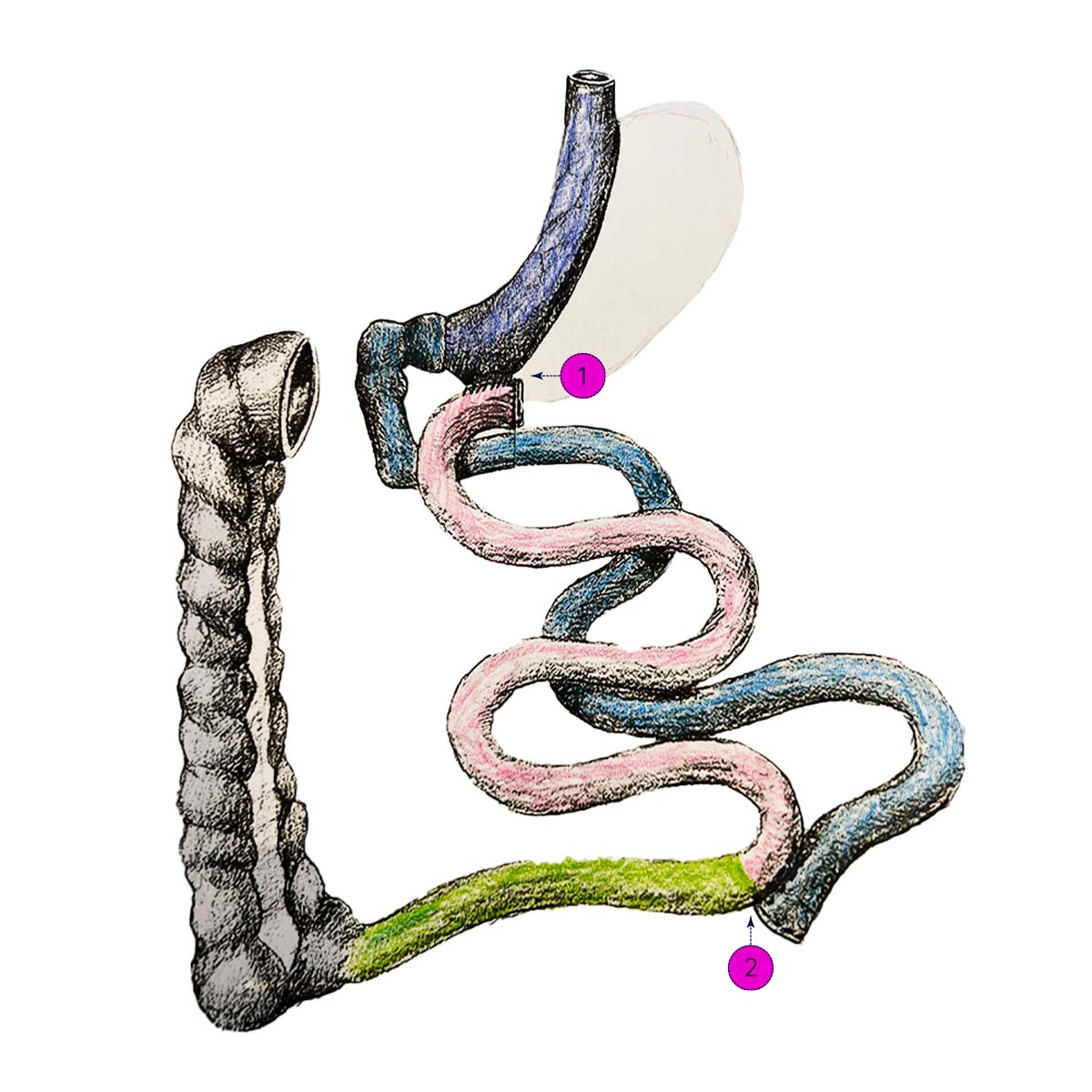
1. Gastro-ileal Anastomosis (GIA)
2. Jejuno-ileal Anastomosis (JIA)
Sleeve Gastrectomy Volume: a. 100 - 200 ml
Native limb (paaseged) lenght: the rest of small bowel
Transitional Limb (TL) length: a. 50-150 cm
Common Channel (CC) Lenght: a. 100 – 250 cm
After Hospitalisation
Lab tests
- Morphology
- Electrolytes
- Ferrum
- Creatinin
- Liver ferments
- Vitamins B1, B12-level
- HDL, LDL, VLDL, Chol
- Ferritin
- Transferrin
- Zinc
- Magnesium
- 1,25-Dihydroxy-Vitamin D3
- Haemoglobin A1c
* after three and six months, then annually
Supplementation
- Multivitamin + Minerals 1 tab. per day
- Biotin, Selenium, Vitamin B9 (B11), Zinc in case of hair problems
Standard Medication after Operation
PPI 20 mg, 0-0-1 (3 months)
Sport and physical activity
- 3 weeks after operation – rest
- more than 3 hours of physical activity per week – sport
medical supervision and medical advice required
Weight loss differences
Since this is a relatively new method, there are no long term results yet.
However, you can already see that the chances of success are very high.
You can lose from 33 to 83 percent of your overweight, and you can positively influence and regulate hormonal mechanisms in the long term.
Important tips
A team of experts must approve the surgery before LCTB operation.
Because we promote safe practice and your safety is of paramount high importance to us and to you, the disadvantages and advantages of the different procedures will be carefully explained to you in detail on consultation.
In the preoperative period, you are provided with care from physicians, psychologists and nutritionists. This team of experts will give you accurate advice on all aspects of the postoperative period: What you can eat and drink, when and how often; what kind of exercises to perform; which individual therapy is necessary for specific issues related to your obesity.
You will have every opportunity to reduce your weight and improve your health. Just imagine the moment when you can wear size L clothes again. Discover your potential and improve your lifestyle.
After surgery, you will normally lose approximately 50 kg in first 6 months, provided that you follow the nutrition plan, take exercise therapy and participate in scheduled group discussions.
Only if you are willing to change yourself you will achieve your goal, i.e. healthy weight loss. You must be aware that this will not always be easy. However, with every pound lost, you will win more quality of life, health and a longer life expectancy.